Scope & limits (disclaimer)
This content provides informational guidance on professional deep-cleaning practices. It does not include proximity phrasing, calls-to-action, phone prompts, ZIP code finders, or external links. No medical advice is provided, and no product recommendations or claims of pathogen-specific efficacy are included. Brand names (e.g., “Servpro”) are mentioned only descriptively and do not imply endorsement, affiliation, or recommendation. This content is intended purely as a procedural overview for those seeking to understand common deep-cleaning approaches and expectations.
What a deep-clean visit typically covers
Professional deep-cleaning teams usually operate from a written scope of work and a detailed room-by-room checklist. The scope ensures that both the provider and the client have aligned expectations regarding the tasks to be performed, the materials involved, and any special considerations. A typical breakdown might include:
-
Kitchen: thorough degreasing of hobs, extractor hoods, backsplashes, and appliance exteriors. Interior cleaning of ovens, fridges, or microwaves is sometimes included if agreed in advance. Handles, knobs, and other high-touch points receive special attention to minimize residual soil.
-
Bathrooms: removal of soil, reduction of mineral deposits, and non-remediation mildew cleaning. Fixtures such as sinks, taps, showerheads, ventilation grilles, and switches are addressed, with an emphasis on surfaces that are frequently touched.
-
Floors & textiles: vacuuming with HEPA-rated equipment to capture fine dust and particulates. Where scoped, low-moisture extraction may be applied to upholstery and carpets to refresh soft surfaces without over-wetting.
-
High-touch disinfection: door handles, handrails, switches, desk edges, and similar frequently touched surfaces are treated according to product label contact times. Exact tasks depend on the scope agreed with the provider and may vary based on household priorities.
Disinfection protocols (methods, not marketing)
Deep-cleaning providers commonly follow a sequence designed to maximize surface safety and limit cross-contamination: pre-cleaning, disinfectant application, adherence to the recommended contact time, and careful separation of tools (e.g., color-coded cloths or separate sets for kitchens versus bathrooms). Products are selected for compatibility with surfaces and must be used according to label instructions. No pathogen-specific claims are made here, and this content does not serve as a product recommendation; verification with the cleaning provider is always advised.
Senior-friendly adjustments (non-medical)
In households with older adults or people with limited mobility, crews often adapt cleaning techniques to reduce strain and maintain safety. Adjustments may include long-reach dusters, low-splash application methods, slip-aware floor care, fragrance-free or low-odor product options, and heightened focus on high-touch zones such as handrails, appliance handles, and taps. These operational adaptations are practical measures, not medical or remediation services.
Planning & expectations (neutral)
Rather than relying on timelines or guaranteed results, it is recommended to align on a written scope, availability window, and any specific sensitivities, such as fragrance preferences or ventilation requirements. Decisions regarding interiors of appliances or work on soft surfaces should be made in advance. Expectations should remain procedural, focusing on agreed tasks rather than outcomes.
Quality you can review
Transparency and accountability are often enhanced through a few key practices:
-
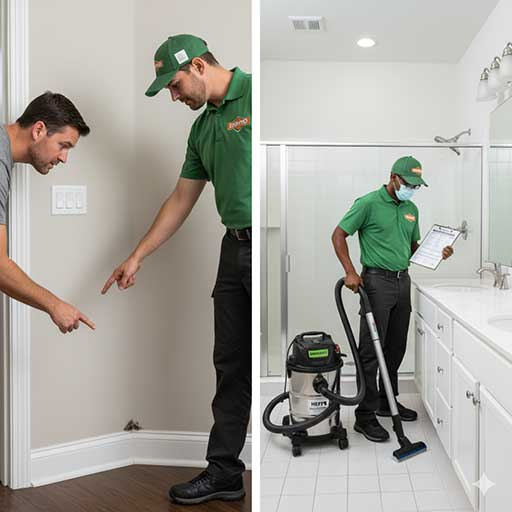
A brief walk-through before cleaning begins to identify priorities and delicate surfaces.
-
A visible task checklist during the service for ongoing tracking.
-
An end-of-visit summary noting completed items and care guidance, such as recommended drying times or additional follow-up steps.
Policies vary by provider, so written confirmation of terms and procedures is advisable.
Materials & surface care (examples)
“Thorough” does not mean “harsh.” Common strategies include:
-
Use of pH-appropriate chemistry for stone, non-etch formulas for glass, peroxide blends in bathrooms where suitable, and neutralizers following heavy degreasing.
-
HEPA capture plus damp-wiping to reduce re-aerosolization of fine dust.
-
Fragrance-free or low-odor options for sensitive occupants.
-
Identification and protection of delicate surfaces during the initial walk-through to avoid accidental damage.
Illustrative scenarios (not guarantees)
Examples of how deep-cleaning may be applied include:
-
Move-in / Move-out: deep kitchen and bathroom cleaning, appliance interiors if scoped, baseboards, and soft surfaces refreshed where included.
-
Post-construction dust: multi-pass HEPA vacuuming and damp-wiping of horizontal surfaces and ventilation grilles to capture fine particulate.
-
After a household illness: enhanced high-touch cleaning and disinfection according to label contact times, with optional soft-surface refresh.
-
Pet or smoke odor: targeted textile cleaning and odor control using controlled moisture and extraction.
Outcomes depend on materials, soil levels, and the agreed scope of work.
What to expect on the day (descriptive flow)
A typical visit may proceed as follows:
-
Access check & walk-through: prioritize areas and note delicate surfaces.
-
Protection: corner guards or floor runners applied where needed.
-
Execution per scope: degreasing, HEPA vacuuming, low-moisture extraction if specified, and disinfection with respect to contact times.
-
Completion notes: review of the checklist and care guidance, such as recommended dry times for floors or surfaces.
Exact steps vary by provider and the specific scope, emphasizing alignment on procedures rather than guaranteeing results.